Carpet area, built-up area and super built-up area: what you actually get
Three areas, one flat. What carpet, built-up and super built-up area mean, which one RERA uses, and how to compare flats fairly before you buy.
Interactive 3D Studio · Published · 3 min read
When you look at flats, you will see sizes quoted in different ways: carpet area, built-up area and super built-up area. They describe the same flat, but the numbers can be very different. Knowing the difference helps you compare flats fairly and understand what you are paying for.
Carpet area: the space you can use
The RERA Act, 2016 defines carpet area as:
the net usable floor area of an apartment, excluding the area covered by the external walls, areas under services shafts, exclusive balcony or verandah area and exclusive open terrace area, but includes the area covered by the internal partition walls of the apartment.
In simple words, it is the floor inside your flat that you can actually use: living room, bedrooms, kitchen, bathrooms and passages, including the thin walls between rooms.
Since RERA came into force, promoters must state the carpet area of each flat. That makes it the fairest number to compare.
Built-up area: carpet area plus walls
Built-up area usually means the carpet area plus the thickness of the outer walls, and often the balcony too. There is no single legal definition, so different sellers may calculate it differently. If a built-up figure is quoted, ask what it includes.
Super built-up area: your share of the building
Super built-up area (sometimes called saleable area) is the built-up area plus a share of the common areas: lobbies, staircases, lift shafts, corridors, and sometimes the clubhouse or other amenities.
It is the biggest of the three numbers, but much of it is space you share with everyone else in the building.
What “loading” means
The difference between the super built-up area and the carpet area is often called loading. Two flats both advertised at the same super built-up size can have quite different carpet areas, depending on how much loading has been added.
That is why the carpet area matters most when you compare.
How to compare flats fairly
- Ask for the carpet area in writing, and the carpet area of each room if possible.
- Ask for balcony and terrace sizes separately. They are useful space, but they are not part of the carpet area.
- Compare the price per square foot of carpet area, not of super built-up area.
- Check that the agreement for sale states the carpet area you were promised.
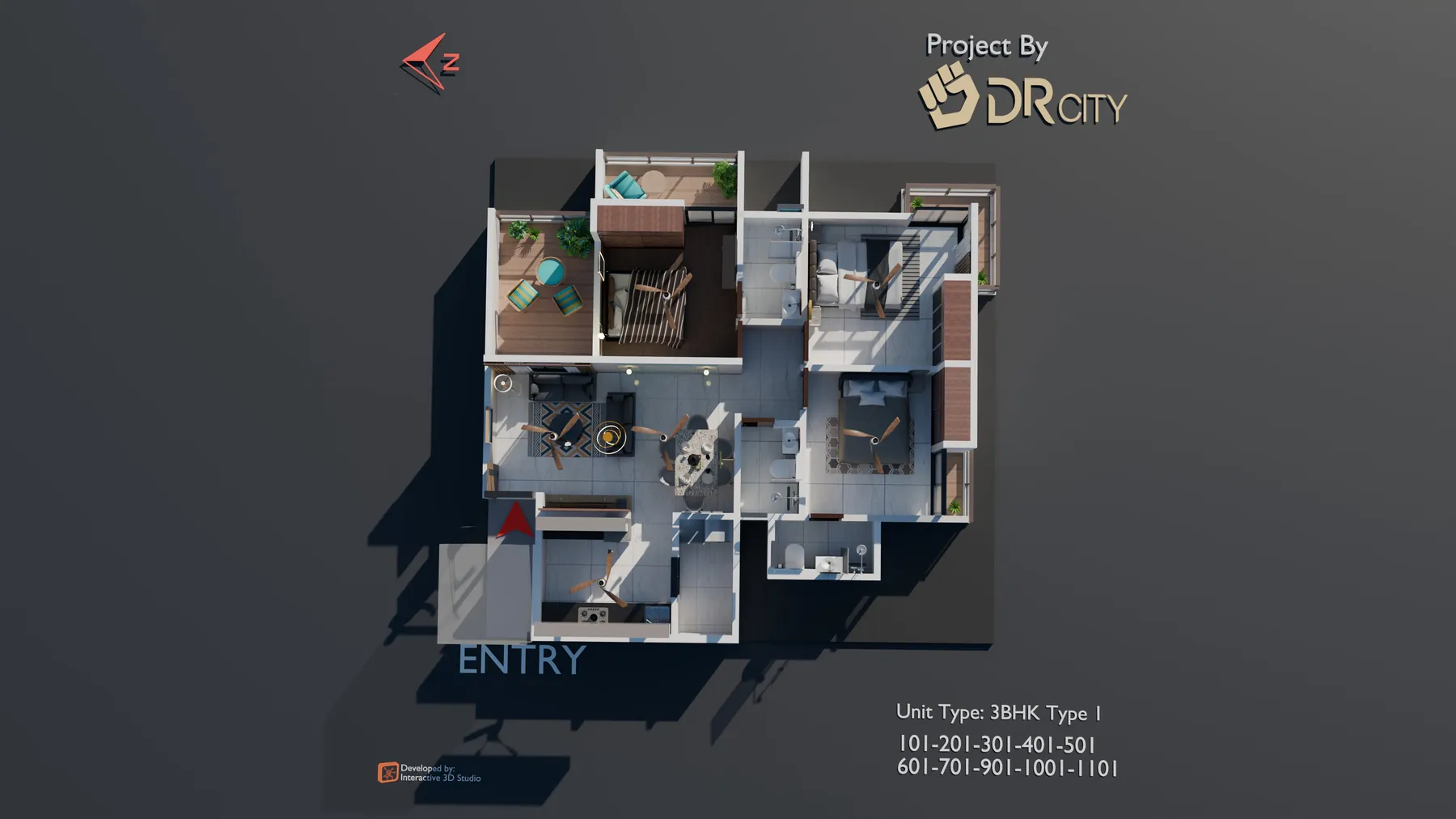
- Look at the floor plan, ideally in 3D. A 3D floor plan shows how the space is laid out, where furniture can go, and how big each room really feels, which the numbers alone cannot tell you.
A quick example
Imagine two flats, both advertised as “1,100 sq ft”. One has a carpet area much closer to that figure than the other. The second may be in a building with large lobbies and amenities, which you pay for through the loading.
Neither is wrong, but you should know what you are paying for. Ask both sellers for the carpet area, and compare like with like.
Planning the interiors once you have chosen? See our room-by-room guide to 2 BHK interiors.
Please note: this guide is general information, not legal or financial advice. Rules and rates change, so check the official websites and take advice from a property lawyer before you pay or sign.
Questions people ask
Which area should the price be based on?
The carpet area. Under the RERA Act, the carpet area of a flat must be stated, so you can compare flats by what you can actually use.
Is the balcony part of the carpet area?
No. RERA's definition of carpet area leaves out exclusive balconies, verandahs and open terraces. They are usually listed separately, so ask for their size.
What is "loading"?
Loading is the difference between the super built-up area and the carpet area: the share of walls and common areas added to your flat's size. The higher the loading, the less of the quoted area you can use.